
Lofoten Northern Lights Forecast
Live aurora activity, space weather and local viewing conditions across the Lofoten Islands.
When is the best time to see the Northern Lights in Lofoten? Our Northern Lights forecast combines space weather data from NOAA with local weather forecasts from MET Norway to help you understand the conditions across the archipelago.
Finding the Northern Lights is about far more than the Kp index. Here in Lofoten, we're ideally positioned beneath the auroral oval, and some of our most spectacular displays occur when planetary activity is relatively low.
Understanding solar wind, magnetic fields, darkness and, perhaps most importantly, local cloud coverage can make all the difference.
As professional Northern Lights guides based in Svolvær, we work with these conditions every night throughout the aurora season. Explore our live forecast below and discover what the Arctic skies have in store.
Northern Lights Forecast
Space weather and local viewing conditions in Lofoten.
Cloud cover and darkness: next 24 hours
Local Norwegian time. ☾ = sun below −12° (nautical darkness). Lower cloud cover is generally preferable.Cloud percentages are forecasts, not visibility probabilities. Local terrain and cloud layers can change viewing conditions.
Three-day viewing outlook
Cloud and darkness outlook only, not a prediction of auroral activity.
Disturbance Storm Time (Dst)
Hourly global magnetic disturbance in nT. Negative values can indicate storm development; quiet Dst does not rule out local aurora. Source: Kyoto WDC via NOAA SWPC.
Norwegian magnetometer stackplot
 Compare magnetic disturbances along the Norwegian station chain.Official stackplot · UiT / NOSWE
Regional magnetometer · last 24 hours
Aurora oval · NOAA OVATION
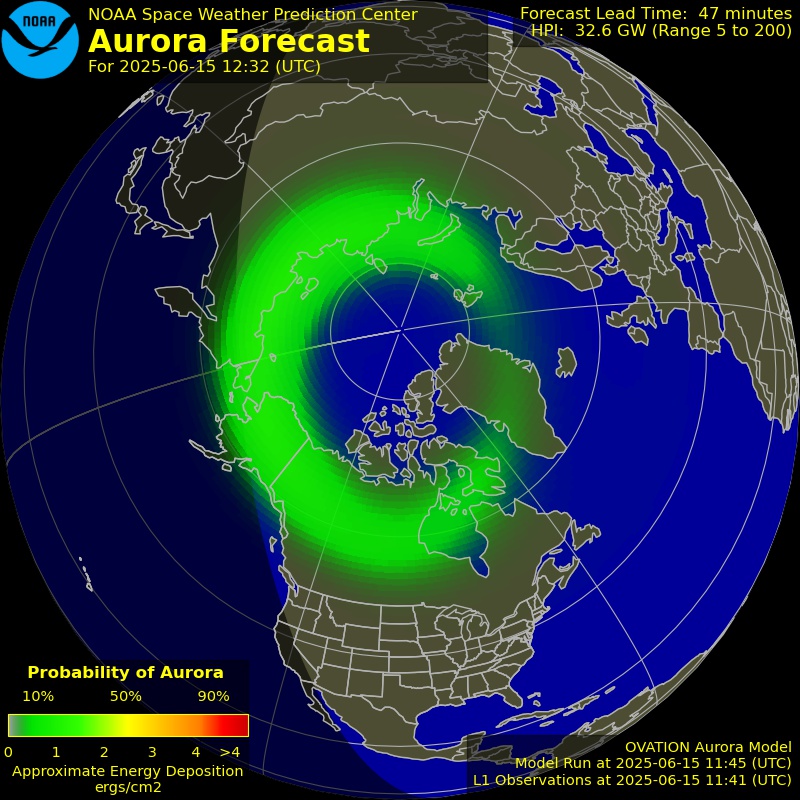
NOAA short-term model, not a guarantee of visible aurora.
What does this mean?
Aurora can occur in Lofoten even during quiet global geomagnetic conditions. Southward Bz can favour energy transfer into Earth's magnetosphere, but conditions change rapidly. Darkness and clear skies matter. Join Lofoten Insight’s local expert guides to improve your chances of finding clearer skies and adapting to changing Arctic weather.
Join the Ultimate Aurora HuntData: NOAA SWPC and MET Norway (CC BY 4.0, selected and reformatted). Solar elevation is approximate. Magnetograms and stackplot: UiT / TGO / NOSWE. Dst: Kyoto WDC via NOAA. Not a tour safety decision.
Give yourself the best chance of seeing the Northern Lights in Lofoten
The Arctic weather doesn't always follow the forecast. Lofoten's dramatic mountains, islands and surrounding ocean create local weather patterns that can vary considerably over surprisingly short distances.
It can be snowing in Svolvær whilst the stars are shining just a short drive away. Knowing where to go, when to move and how to interpret changing conditions is where local expertise makes a real difference.
Our experienced Northern Lights guides at Lofoten Insight combine scientific knowledge, years of practical experience and an intimate understanding of the local landscape to seek out the best available viewing conditions.
Rather than relying on an app or waiting beneath a cloudy sky, join us on our Ultimate Aurora Hunt and let our local experts take care of the adventure.
The Northern Lights are never guaranteed, but we can certainly improve your chances!
Live views around our Svolvær base
Take a look at our Arctic home from the neighbouring island of Skrova. Explore the skies and mountains around Svolvær and the Vestfjord through three regularly updated weather cameras.

North
Towards the islands and Svolvær area
West
Towards Austvågøya and the Lofoten mountains
East
Across the Vestfjord towards the mainlandWeather camera images: Stiftelsen Norsk Luftambulanse, via Yr. Cameras are located on Skrova, not at our office. Still images, not continuous video. Alternative camera directory.
Experience Lofoten with local experts
From our base in Svolvær, our local guides explore the islands every day. During Northern Lights season, we adapt to changing weather and seek out clearer skies to give you the best possible opportunities.
Join the Ultimate Aurora Hunt-
Our live Northern Lights forecast above combines space weather data, solar wind measurements, regional magnetometer readings and local cloud coverage to help you understand tonight's aurora viewing conditions in Lofoten.
Unlike many Northern Lights forecasts, we look beyond the Kp index. Lofoten is exceptionally well positioned beneath the auroral oval, meaning that even relatively low geomagnetic activity can produce spectacular displays. Local weather and cloud coverage are often the most important factors when planning a successful Northern Lights hunt. There is much more to understand and our expert guides know how to interpret this data, and more, as well as how to find the clearest skies available. This is why the Ultimate Aurora Hunt has such high success and finding northern lights for our guests in Lofoten.
-
During the Northern Lights season, from late August to mid-April, it is possible to see the aurora in Svolvær whenever the skies are sufficiently dark and clear and auroral activity is present.
However, the weather in Lofoten can vary dramatically over short distances. Cloudy skies in Svolvær do not necessarily mean that the Northern Lights are impossible to see elsewhere in the islands. Our local guides regularly monitor weather conditions across the archipelago, seeking out breaks in the clouds and adapting their routes throughout the evening.
Check our live forecast above for the latest conditions.
-
There is no minimum Kp index required to see the Northern Lights in Lofoten. Aurora displays are possible even at Kp 0 or Kp 1 because of our geographical position beneath the auroral oval.
The Kp index measures planetary geomagnetic disturbance rather than the visibility or intensity of the Northern Lights at a specific location. A high Kp index does not guarantee a spectacular display in Lofoten, and a low Kp index certainly does not mean you should stay indoors.
Solar wind speed, the interplanetary magnetic field, regional magnetometer activity and local weather conditions can provide a more useful picture of aurora viewing opportunities.
-
Some popular Northern Lights viewing locations in Lofoten include Gimsøy, Uttakleiv, Haukland Beach, Eggum, Flakstad and the coastal areas around Laukvik.
However, the best place to see the Northern Lights is wherever you have clear skies, sufficient darkness and an unobstructed view of the active aurora. There is no single location that consistently offers the best conditions.
Our Northern Lights guides at Lofoten Insight select locations based on the prevailing weather, cloud movement, wind direction and auroral activity rather than following a predetermined itinerary. This flexibility is one of the greatest advantages of joining a guided Northern Lights hunt.
-
The Northern Lights season in Lofoten typically runs from late August until mid-April. September, October, February and March are particularly attractive months, offering a good balance of darkness and daylight for exploring the islands.
September and March are also close to the equinoxes, when interactions between the solar wind and Earth's magnetic field can statistically favour increased geomagnetic activity.
December and January offer extended hours of darkness, beautiful Arctic twilight and wonderful opportunities to experience the Northern Lights above snow-covered landscapes.
There is no single month that guarantees better sightings. Solar activity and local weather ultimately determine the viewing conditions on any given night.
-
The Northern Lights occur high in Earth's atmosphere, typically at altitudes of around 60 to 400 kilometres, well above ordinary weather clouds.
Thick cloud cover will therefore obscure the aurora. However, bright Northern Lights can sometimes be visible through thin or translucent clouds, and even relatively small breaks in the cloud cover can reveal spectacular displays.
A forecast showing substantial cloud coverage does not necessarily mean that a Northern Lights hunt will be unsuccessful. Understanding cloud layers, wind direction, local geography and moving weather systems is an important part of what our experienced guides do.
-
Northern Lights forecasts are useful planning tools, but they cannot accurately predict the exact time, location or intensity of an individual aurora display.
Space weather forecasts can provide advance notice of potentially enhanced geomagnetic activity, particularly when coronal mass ejections or high-speed solar wind streams are expected to reach Earth. Real-time solar wind measurements and models such as NOAA's OVATION aurora forecast can help assess shorter-term conditions.
Regional magnetometer readings and stackplots provide additional information about geomagnetic disturbances already occurring, whilst the Disturbance Storm Time index (Dst) helps us understand the development of geomagnetic storms.
Ultimately, the Northern Lights are a dynamic natural phenomenon. Combining scientific data with real-time observations, local weather knowledge and practical experience is far more effective than relying on a single forecast or index.
I’ll give you one insider secret, but don’t tell anybody! If you know how to interpret the data, Norlys is the best aurora tool ;)
-
Absolutely! A full moon does not prevent the Northern Lights from appearing.
Although bright moonlight can reduce the contrast of weaker aurora displays against the night sky, strong Northern Lights remain clearly visible during a full moon.
For photographers, moonlight can actually be a significant advantage. It naturally illuminates Lofoten's mountains, beaches and snow-covered landscapes, creating depth and detail in Northern Lights photographs that can be difficult to achieve on completely dark nights.
Rather than avoiding the full moon, consider it a different opportunity to experience and photograph the Arctic night. Our Lofoten Moonlight Planner can help you understand the lunar conditions for your chosen travel dates.
-
Yes, particularly if you want to maximise your chances of seeing the Northern Lights during a limited stay in Lofoten.
Finding the aurora involves much more than checking a forecast and driving somewhere dark. Understanding local weather systems, identifying potential breaks in the clouds, interpreting space weather data and knowing suitable viewing locations all play an important role.
At Lofoten Insight, our experienced local Northern Lights guides combine scientific knowledge with practical experience and an intimate understanding of the islands. We continually assess conditions throughout the evening, adapting our plans to seek out the best available opportunities rather than simply visiting a fixed location.
No company can guarantee a natural phenomenon, but joining a professional Northern Lights hunt allows you to benefit from local expertise, relax and enjoy the adventure without the challenges of navigating unfamiliar Arctic roads at night.
Join our Ultimate Aurora Hunt and discover the magic of the Northern Lights with the people who know Lofoten best.
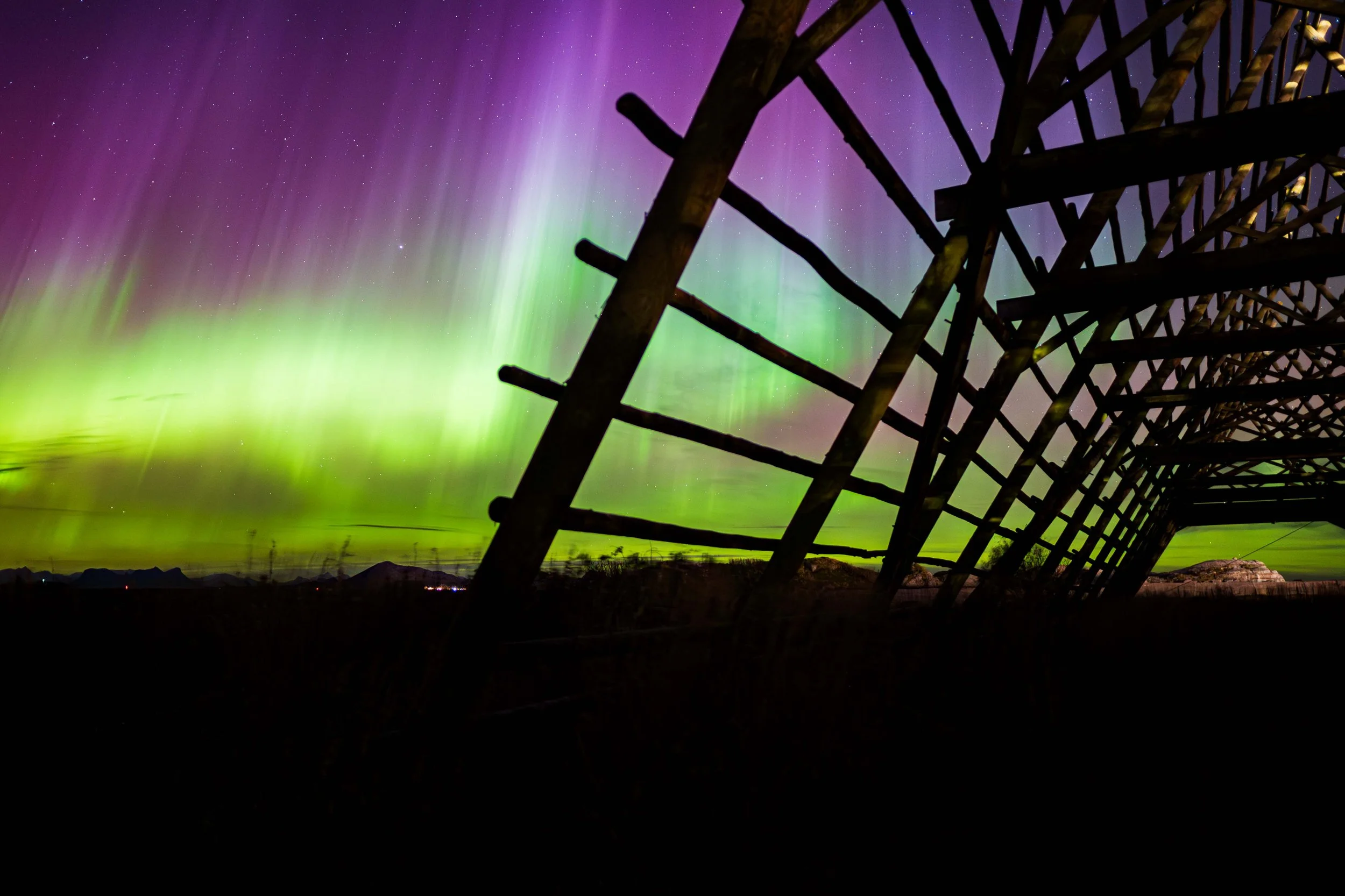
The Northern Lights Through Our Eyes
Every night is different. From delicate green arcs stretching across the Arctic sky to spectacular coronas dancing directly above us, the Northern Lights never cease to amaze us.
These photographs capture real moments beneath the Lofoten skies, experienced by our guides and guests. They are a reminder of why we do what we do, and why no two Northern Lights adventures are ever the same.
The forecast is only the beginning. The real magic happens outside.
Behind the Forecast: Your Local Aurora Experts
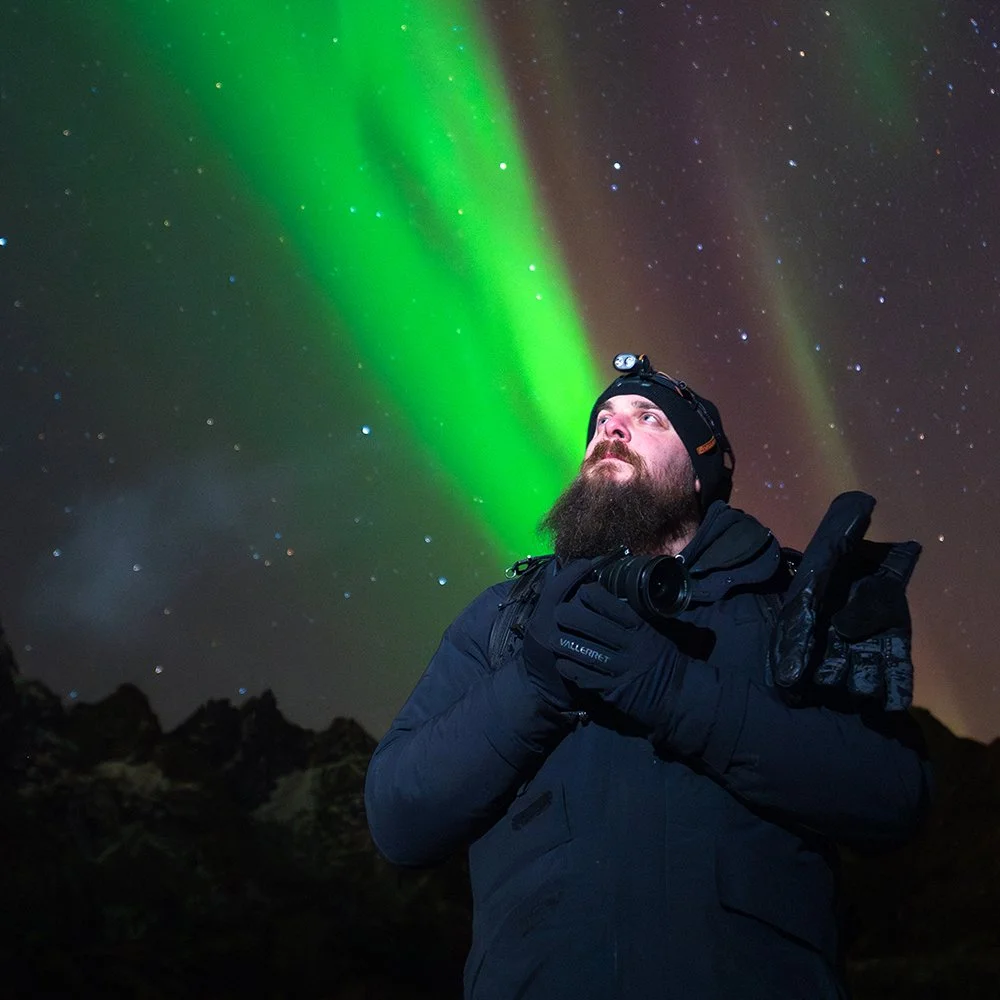
At Lofoten Insight, the Northern Lights are more than a tourist attraction. They're our passion, our profession and a remarkable part of life here in the Arctic.
Based in Svolvær, our team of experienced Northern Lights guides combines an understanding of space weather, meteorology, photography and local geography to explore the skies throughout the aurora season.
The Lofoten Insight Aurora Observatory brings together many of the scientific data sources we use ourselves, helping visitors better understand this extraordinary natural phenomenon.
We don't simply follow the forecast. We know how to interpret it.
What our guests say
“The weather in Svolvar was terrible so I wasn’t holding out much hope, but Dave our guide found some amazing spots, 100% would recommend.”
TripAdvisor Reivew
“Eric worked tirelessly, using every bit of local insight to chase down clear skies. And it paid off: we saw the Aurora.”
TripAdvisor Review
“Bjørg was ready to answer all our questions and enthusiastic about the hunt until the end.”
TripAdvisor Review
