
The Most Colourful Darkness You'll Ever See
Imagine visiting a place where the sun doesn't rise for almost a month. Sounds pretty dark, doesn't it? Well, welcome to polar night in Lofoten, one of the most beautiful and misunderstood times of year in Arctic Norway.
Every winter, the Lofoten Islands experience a remarkable natural phenomenon known as mørketid, literally translated from Norwegian as "the dark time."
For many visitors, the idea of travelling somewhere without sunlight sounds a little strange. Why visit Lofoten in December or January when the sun doesn't even come up?
Here's the surprise: polar night in Lofoten can be one of the most colourful, atmospheric and photogenic periods of the entire year.
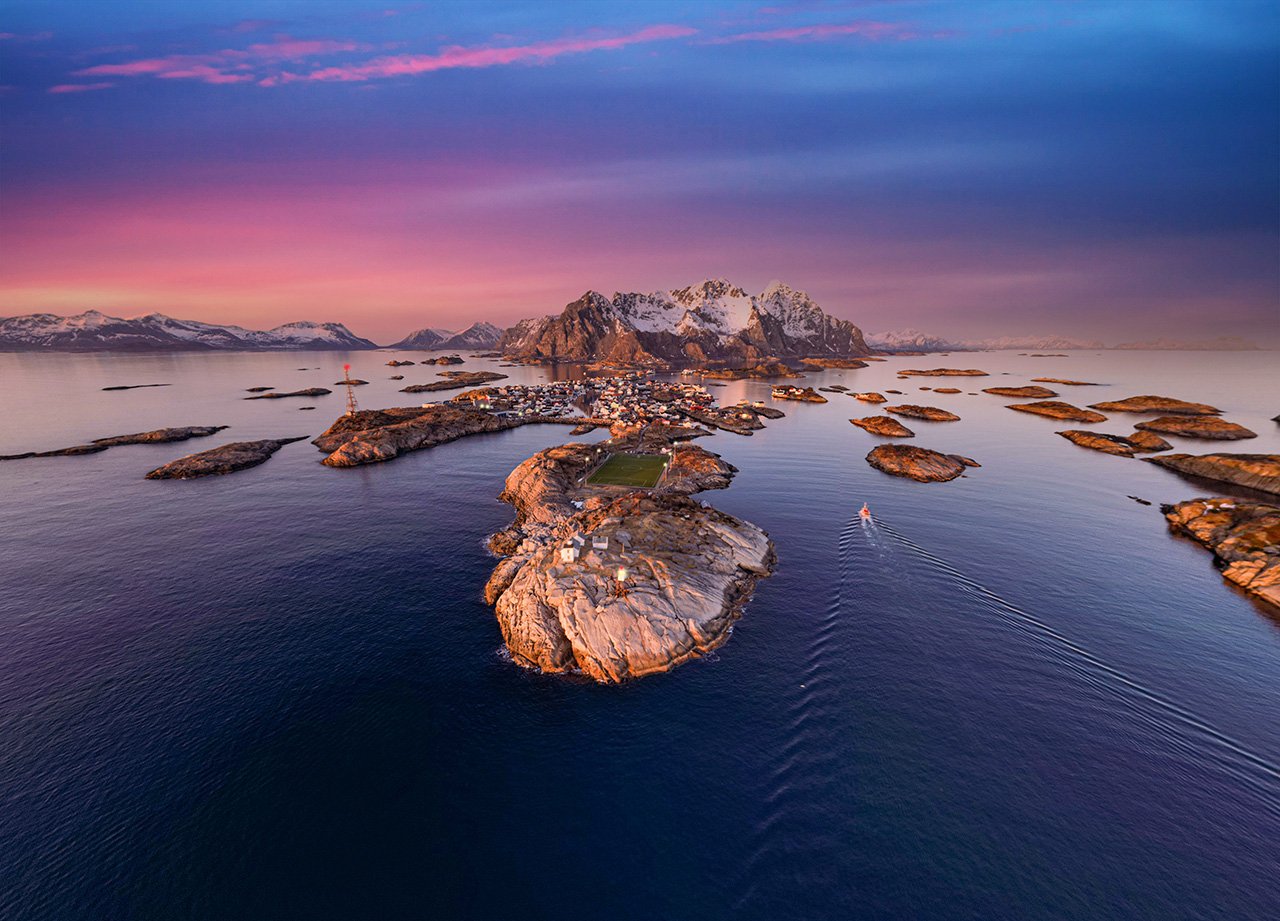
The mountains turn pink, the sky glows purple and orange, fishing villages sparkle against deep blue twilight, and the Northern Lights can make an appearance long before bedtime.
Far from being a reason to avoid Lofoten in winter, mørketid is something you really should experience at least once.
Fun Fact: We Don't Actually Get True Polar Night in Lofoten!
Here's something that surprises a lot of visitors: although we experience mørketid, or polar night, in Lofoten, we don't actually experience complete darkness throughout the day! The science is quite simple. During polar night, the Sun stays below the horizon, but here in Lofoten we're only just above the Arctic Circle, so it doesn't sink very far below it. Around midday, sunlight is still scattered through the atmosphere, creating a beautiful period of twilight, often with incredible shades of blue, pink, orange and purple. This is known as civil twilight, and it means we still have several hours of usable natural light, even though the Sun never actually rises. So, if you're worried about visiting Lofoten in December and spending your entire holiday in darkness, don't be! We don't suddenly have pitch-black nights in the middle of the day. Instead, we have some of the most extraordinary light you'll ever see, and for photographers, it's like having an extended golden hour without the Sun getting in the way!
What Is Polar Night in Lofoten?
Polar night is the opposite of the Midnight Sun.
During summer, the sun remains above the horizon for weeks at a time. In winter, the situation reverses, and the sun stays below the horizon throughout the day.
In Svolvær, the main town of the Lofoten Islands, polar night typically lasts from around 7 December until 5 January.
During this period, the sun never rises above a clear, level horizon. There is no conventional sunrise or sunset, and the sun remains hidden even at midday.
But that doesn't mean complete darkness.
And this is where things get interesting.

The Difference Between Polar Night and Mørketid
You'll often hear the words polar night and mørketid used interchangeably in Northern Norway, but there's a useful distinction between the astronomical phenomenon and how we experience the season.
Polar night has a specific astronomical meaning. It's the period when the sun doesn't rise above the horizon at all.
Mørketid, on the other hand, is a Norwegian expression meaning "the dark time." Although it's commonly used to describe the official polar night, it can also refer more generally to the darker part of the Arctic winter.
In everyday conversation, locals might talk about mørketid before the official polar night has begun, simply because the days have already become remarkably short.
There's another important distinction: not all polar nights are equally dark.
Astronomers classify different types of polar night according to how far the sun remains below the horizon. In areas much farther north, such as Svalbard, the sun can remain so far below the horizon that even midday twilight disappears.
That's sometimes called a civil polar night, when the sun never comes close enough to the horizon to produce civil twilight.
Lofoten doesn't experience that kind of continuous deep darkness.
Because we're relatively close to the Arctic Circle, the sun remains close enough to the horizon to illuminate the sky for several hours around midday, even though it never actually rises.
And those few hours are absolutely spectacular.
The Incredible Colours of Polar Night
If there's one thing that surprises visitors during polar night in Lofoten, it's the light.
Or, more accurately, the colours.
Without the sun rising above the horizon, daylight takes on a completely different character.
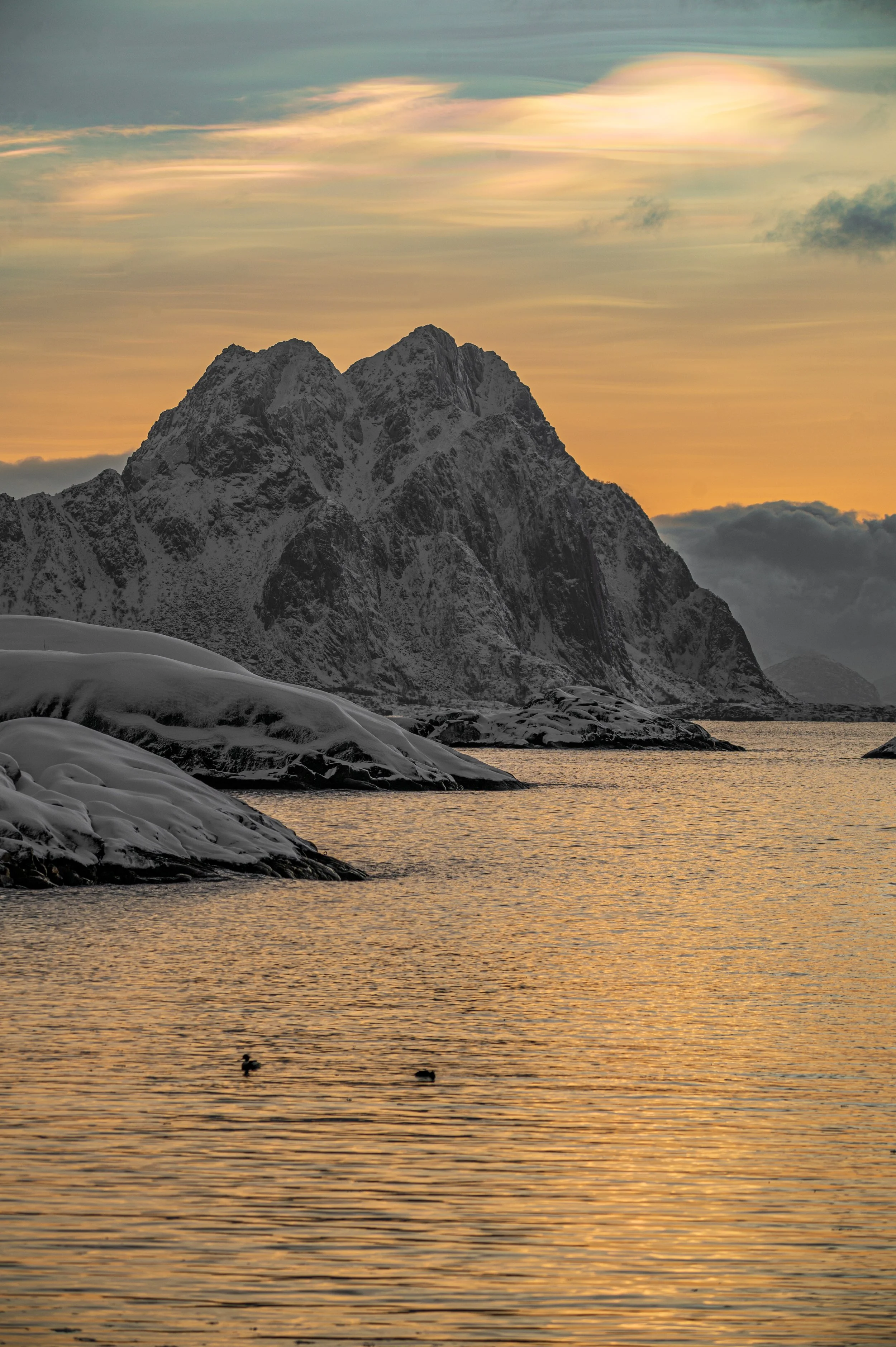
Instead of a conventional sunrise followed by bright midday sunshine, the sky slowly brightens into a beautiful Arctic twilight.
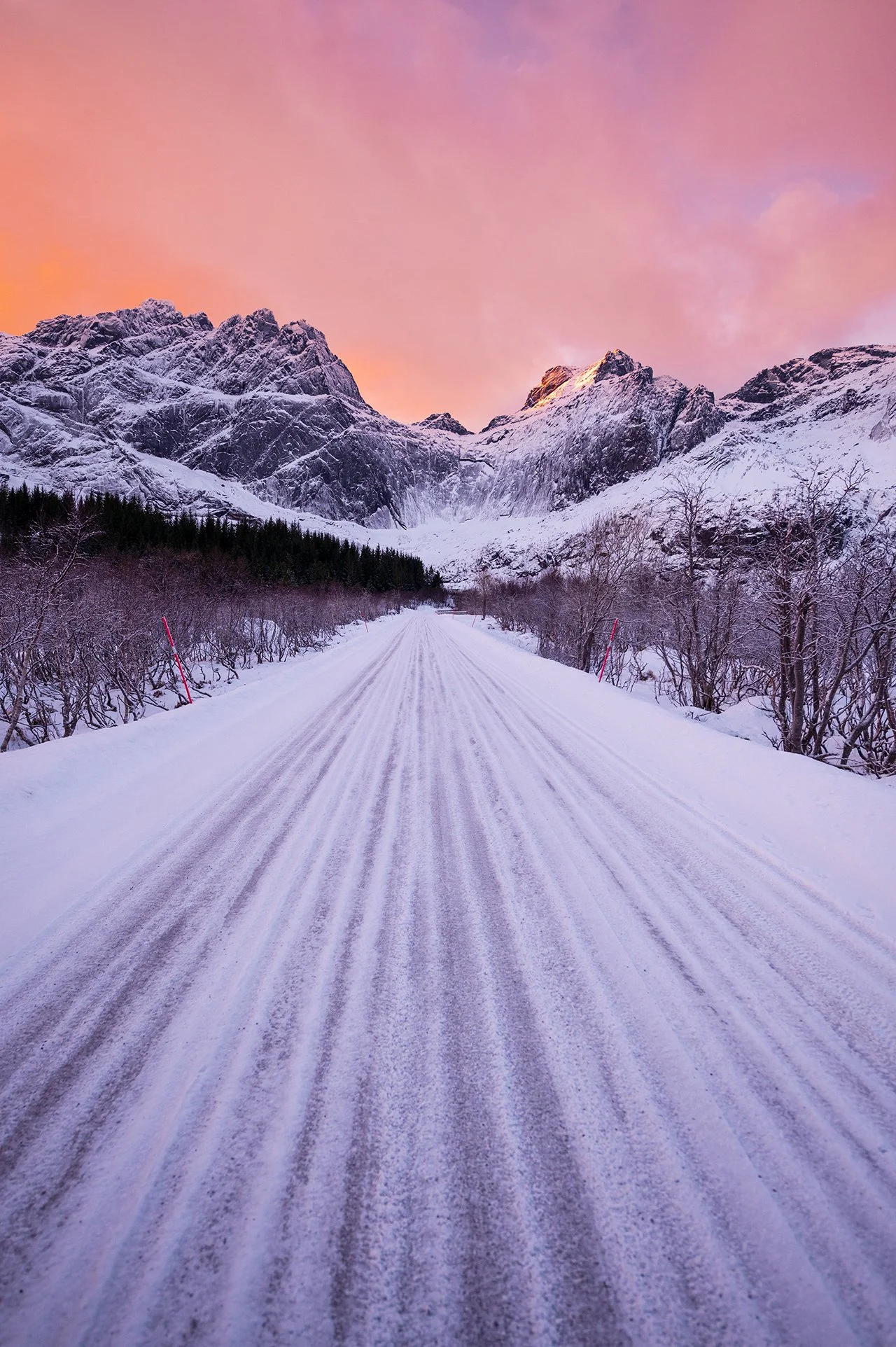
Deep blues gradually give way to purples, pinks, oranges and sometimes intense reds. On clear days, the southern horizon can glow with colour while snow-covered mountains catch the subtle ambient light.
Then the colours slowly change again as afternoon fades into darkness.
It's almost like experiencing one enormous sunrise that blends straight into sunset, without the sun ever appearing.
For photographers, this is extraordinary.
The low-angle light and delicate colours create incredible opportunities for landscape photography. Snow-covered peaks, traditional red fishermen's cabins, dramatic fjords and frozen coastal landscapes all look beautiful beneath the soft Arctic sky.
Even familiar locations around Svolvær, Henningsvær and Reine take on an entirely different appearance.
Some of my favourite photographic conditions in Lofoten occur during this period, when the landscape seems to glow in shades of blue and pink.
Of course, the weather still has the final say. Heavy cloud can make the days considerably darker, but when the skies cooperate, the results are magical.
How Much Daylight Is There During Polar Night?
This is one of the most common questions we hear from visitors planning a winter trip to Lofoten.
If the sun never rises, how much light do you actually get?
Around the winter solstice, usually 21 December, Svolvær experiences approximately five hours of civil twilight, centred around midday.
That doesn't mean five hours of bright daylight. The intensity of the light varies considerably, and conditions depend on cloud cover and the surrounding mountains.
Nevertheless, it's often perfectly possible to explore, enjoy the scenery and take photographs during this period.
The important thing is to plan your day around the available light.
My advice? Don't waste the best light sitting in your hotel room!
During polar night, the daylight hours are precious. Make the most of them.
Get outside in the morning, explore the landscape while the sky is illuminated, and save your indoor activities for later in the afternoon.
Why Polar Night Is a Fantastic Time for Lofoten Sightseeing Tours
Short winter days might sound limiting, but they can actually make guided sightseeing experiences incredibly rewarding.
At Lofoten Insight, we know how dramatically the light changes throughout the winter, and we understand the importance of making the most of the available daylight.
Our guided tours from Svolvær are designed to showcase the landscapes, history and culture of the Lofoten Islands, with knowledgeable local guides bringing the experience to life.
Road Trip to Reine
Our Road Trip to Reine takes you through some of the most spectacular landscapes in Lofoten, including the famous fishing villages of Hamnøy, Sakrisøy and Reine.
During polar night, these destinations can look extraordinary.
Imagine traditional red fishing cabins beneath a purple sky, snow-covered mountains rising from a turquoise fjord, and the soft glow of twilight illuminating the coastline.
It's a photographer's dream.
Lofoten in a Nutshell
If you're looking for things to do in Svolvær and the surrounding area, our Lofoten in a Nutshell tour is an excellent introduction to the islands.
Exploring eastern Lofoten, including historic Kabelvåg and beautiful Henningsvær, this experience combines spectacular landscapes with local history, culture and fascinating stories.
The shorter travel distances make it particularly appealing during winter, when time in the available light is valuable.
Lofoten Sagas
Of course, not every activity depends on daylight.
Our Lofoten Sagas walking tour explores the fascinating history of Svinøya, the traditional fishing community in Svolvær.
Discover the stories of the Lofoten fishery, the lives of the fishermen who travelled here, and the importance of the sea to the people of these islands.
It's a wonderful way to discover the culture behind the scenery.
The beauty of visiting Lofoten with a local guide is that you can concentrate on enjoying the experience while we take care of the route, the winter driving and the stories along the way.
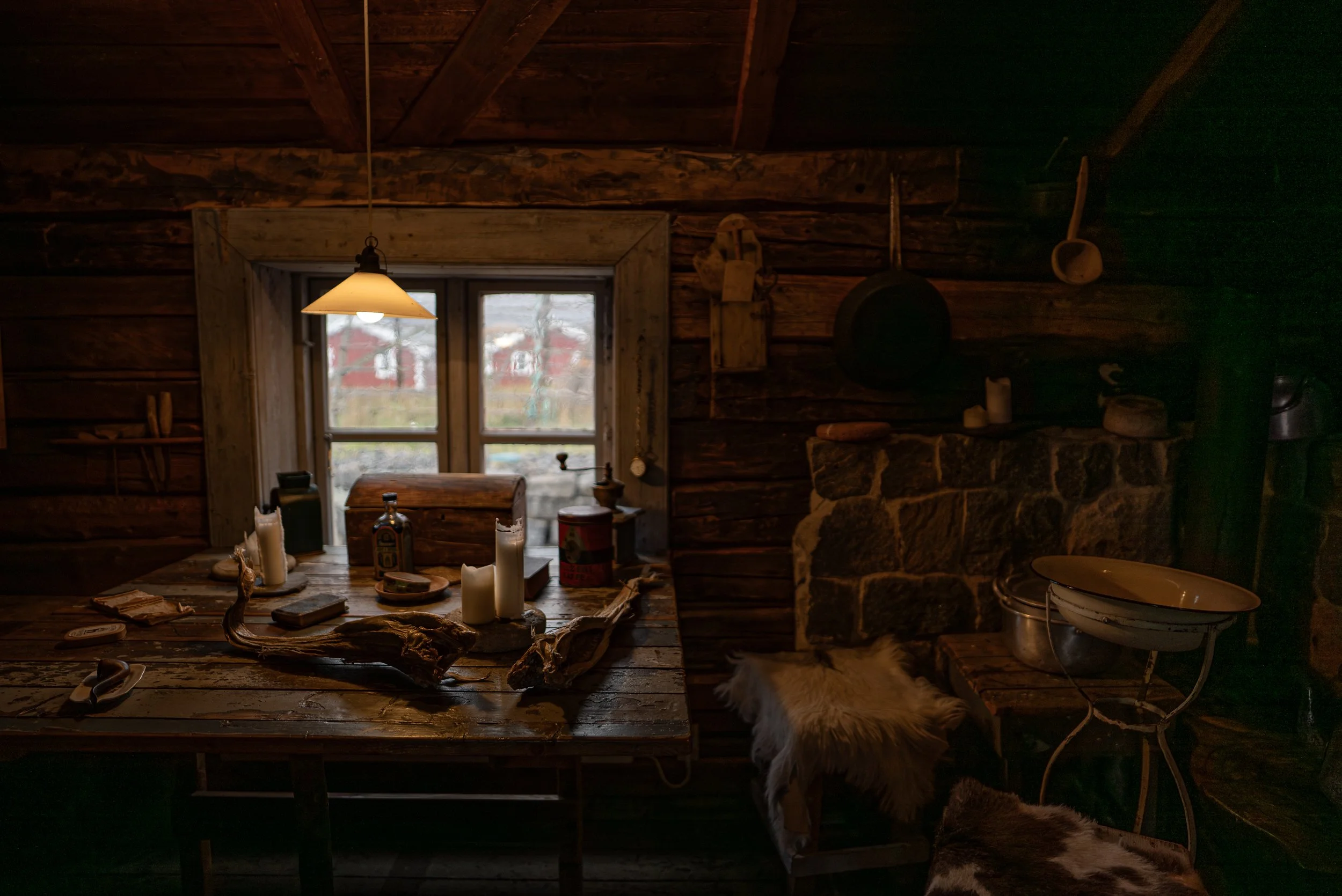
Polar Night Photography: A Dream for Photographers
If you're a photographer visiting Lofoten, don't be put off by the lack of direct sunlight.
In fact, embrace it.
During much of the year, landscape photographers plan their days around sunrise and sunset. We get up early, wait for the golden hour, and hope the conditions cooperate.
During polar night, things work a little differently.
With the sun remaining below the horizon, the beautiful twilight conditions can extend across several hours.
That means there's more time to work with subtle colours, experiment with compositions and capture the extraordinary atmosphere of Arctic winter.
A few photography tips for polar night in Lofoten:
Use a tripod: Light levels can be low, especially towards the beginning and end of twilight. A tripod lets you use lower ISO settings and capture more detail.
Watch your exposure: Snow and bright skies can confuse your camera's metering system. Check your histogram and adjust accordingly.
Don't forget the blue hour: The transition between daylight and darkness can produce wonderful deep-blue tones.
Use the colours: Look for combinations of pink skies, blue mountains and colourful fishing cabins.
Dress warmly: Cold hands make photography considerably less enjoyable. Good gloves, waterproof clothing and proper winter footwear are essential.
Keep an eye on the weather: Breaks in the cloud can transform an ordinary scene into something incredible within minutes.
Perhaps most importantly, don't pack your camera away just because the sun has disappeared.
In Lofoten, some of the best photography happens when the sun isn't visible at all.
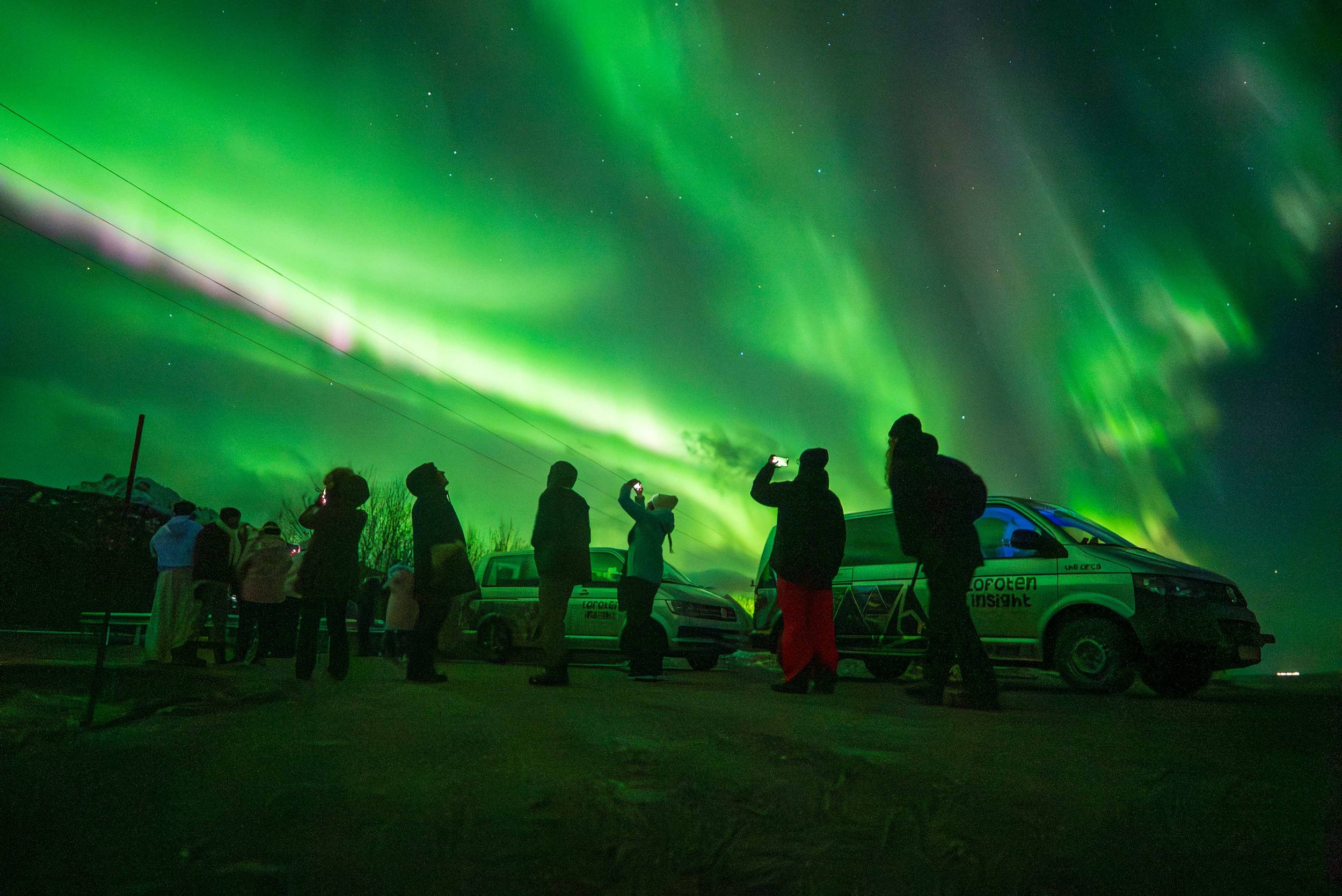
Northern Lights During Polar Night: You Don't Have to Wait Until Late
There's another fantastic advantage to visiting Lofoten during polar night.
It gets dark early enough for the Northern Lights to appear in the afternoon!
The aurora borealis doesn't have a fixed timetable. It's caused by charged particles interacting with Earth's magnetic environment and atmosphere, and displays can occur at any time.
However, we can only see the Northern Lights when the sky is sufficiently dark.
During summer, the Midnight Sun prevents us from seeing aurora displays even when they're happening overhead.
During polar night, the situation is very different.
With darkness arriving early in the afternoon, it's entirely possible to see the Northern Lights during the late afternoon or early evening if conditions are right.
That means you could spend the daytime exploring the spectacular landscapes of Lofoten before heading out to search for the aurora.
Of course, darker skies don't guarantee Northern Lights. You still need suitable aurora activity and, crucially, gaps in the cloud cover.
Join Our Ultimate Aurora Hunt
Our Ultimate Aurora Hunt is one of our signature experiences at Lofoten Insight.
As local aurora specialists and photographers, we use our knowledge of the weather, cloud conditions and geography to search for the best opportunities to see and photograph the Northern Lights.
We don't simply drive to one viewpoint and hope for the best. We assess the conditions and make informed decisions about where to go.
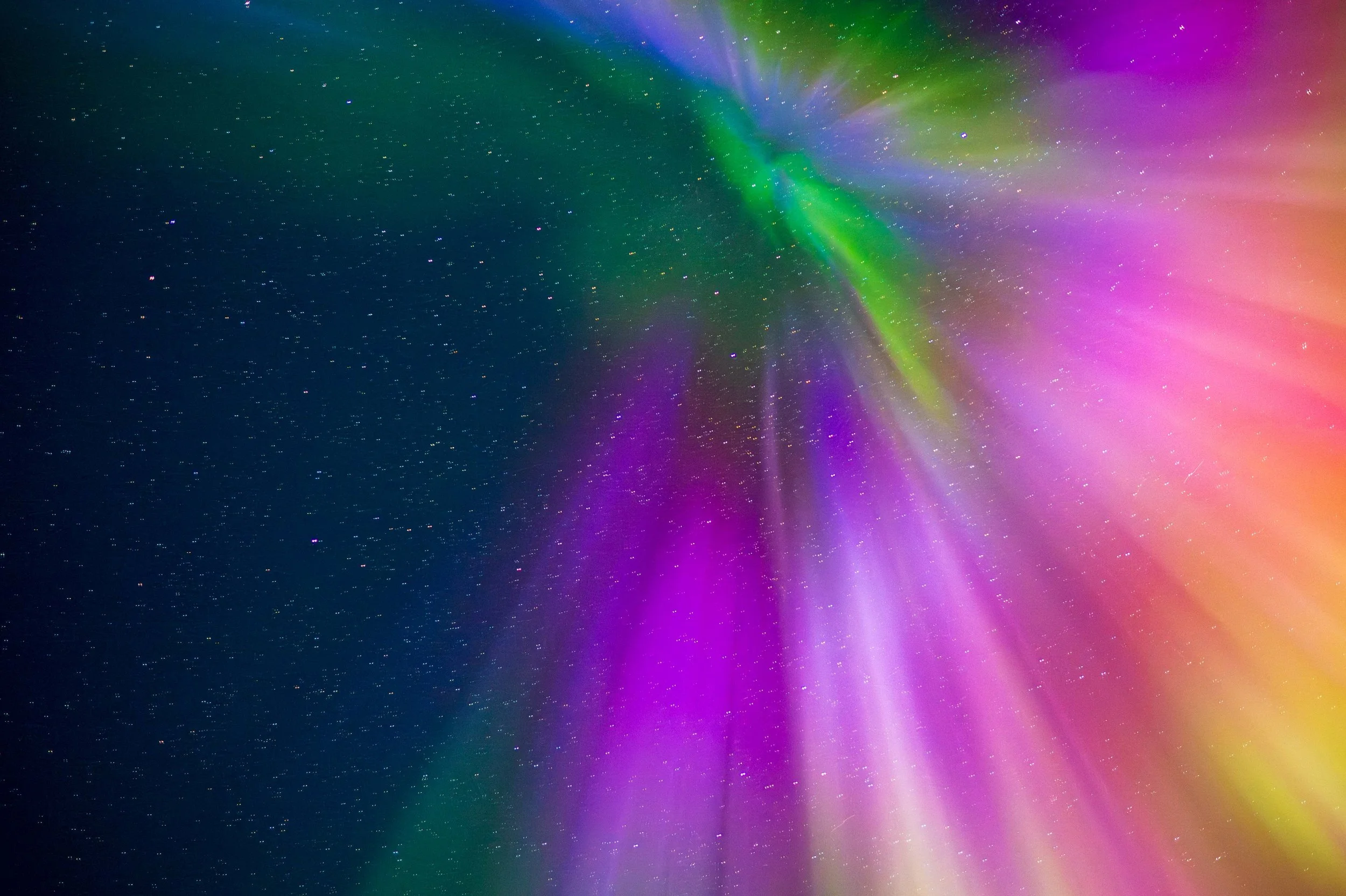
And because our guides understand Northern Lights photography, we can help you capture those beautiful green, purple and sometimes red curtains of light.
Whether it's your first aurora experience or you're a keen photographer hoping to capture something special, a guided Northern Lights tour can be one of the highlights of your winter visit to Lofoten.

Make the Most of Daylight, Then Enjoy Some KOS
There's something wonderful about the contrast between exploring the cold Arctic landscape and stepping inside somewhere warm and welcoming.
After a few hours in the crisp winter air, watching the sky turn pink and photographing snow-covered mountains, a hot drink becomes particularly appealing.
That's where a little Norwegian kos comes in.
Kos is one of those lovely Norwegian words that doesn't translate perfectly into English. It describes a sense of comfort, warmth, togetherness and simply enjoying the moment.
And we happen to have just the place for it.
Visit KOS Lofoten in Svolvær
Located at Galleri Gunnar Berg on beautiful Svinøya, KOS Lofoten is our cosy café where you can warm up after exploring the Arctic landscape.
Enjoy a freshly prepared coffee, a delicious hot chocolate, a warm toastie, waffles or a slice of homemade-style cake while you relax and take in the atmosphere.
It's a lovely place to escape the winter chill, chat about your adventures and enjoy a little Norwegian hospitality.
You can also explore the gallery and discover another side of Lofoten's artistic and cultural heritage.
After all, polar night isn't just about embracing the darkness outside.
It's also about enjoying the warmth inside.
Visit koslofoten.com for more information and current opening hours.
Is December a Good Time to Visit Lofoten?
Absolutely!
December is a special time to visit the Lofoten Islands, particularly if you enjoy winter scenery, photography, Northern Lights and the atmosphere of Arctic life.
The lack of direct sunlight creates conditions unlike almost anywhere else in the world.
Instead of conventional daylight, you'll experience soft pastel skies, long periods of twilight and wonderfully atmospheric landscapes.
The Christmas season brings additional warmth and charm to the villages, with festive lights glowing against the dark Arctic backdrop.
And with Northern Lights potentially appearing early in the evening, there's plenty to enjoy after the daylight fades.
Naturally, winter travel in Lofoten requires some flexibility.
Weather conditions can change quickly, roads can be icy, and snow, rain or strong winds are all possible.
That's one reason why joining a guided tour can be such a good option, particularly if you're unfamiliar with Arctic winter driving.
Our team at Lofoten Insight knows the local conditions and understands how to adapt the experience to the weather and available light.
Experience the Magic of Polar Night with Lofoten Insight
Polar night is one of the most misunderstood natural phenomena in the Arctic.
People imagine weeks of complete darkness, but the reality in Lofoten is something entirely different.
It's a season of incredible colours, extraordinary landscapes, peaceful winter atmosphere and the possibility of watching the Northern Lights dance above the mountains.
It's a time to slow down, appreciate the light when it appears, and enjoy the incredible contrast between the wild Arctic landscape and the warmth of Norwegian hospitality.
Whether you're planning a photography adventure, searching for the Northern Lights, or looking for the best things to do in Lofoten during winter, we'd love to show you what makes this season so special.
Join Lofoten Insight for a guided sightseeing tour, discover the Northern Lights with our expert aurora guides, and make the most of every beautiful moment of polar night.
And when you've finished exploring, come and enjoy a little KOS with us on Svinøya.
Because here in Lofoten, even the darkness can be absolutely beautiful.
Explore and Book Our Lofoten Tours
Once in a lifetime, as often as you can.