
Planning a Trip to Lofoten
This comprehensive guide answers the most common questions about visiting one of the world's most spectacular destinations, from northern lights and midnight sun to accommodation, activities, travel tips, and local insights.
Is Lofoten worth visiting?
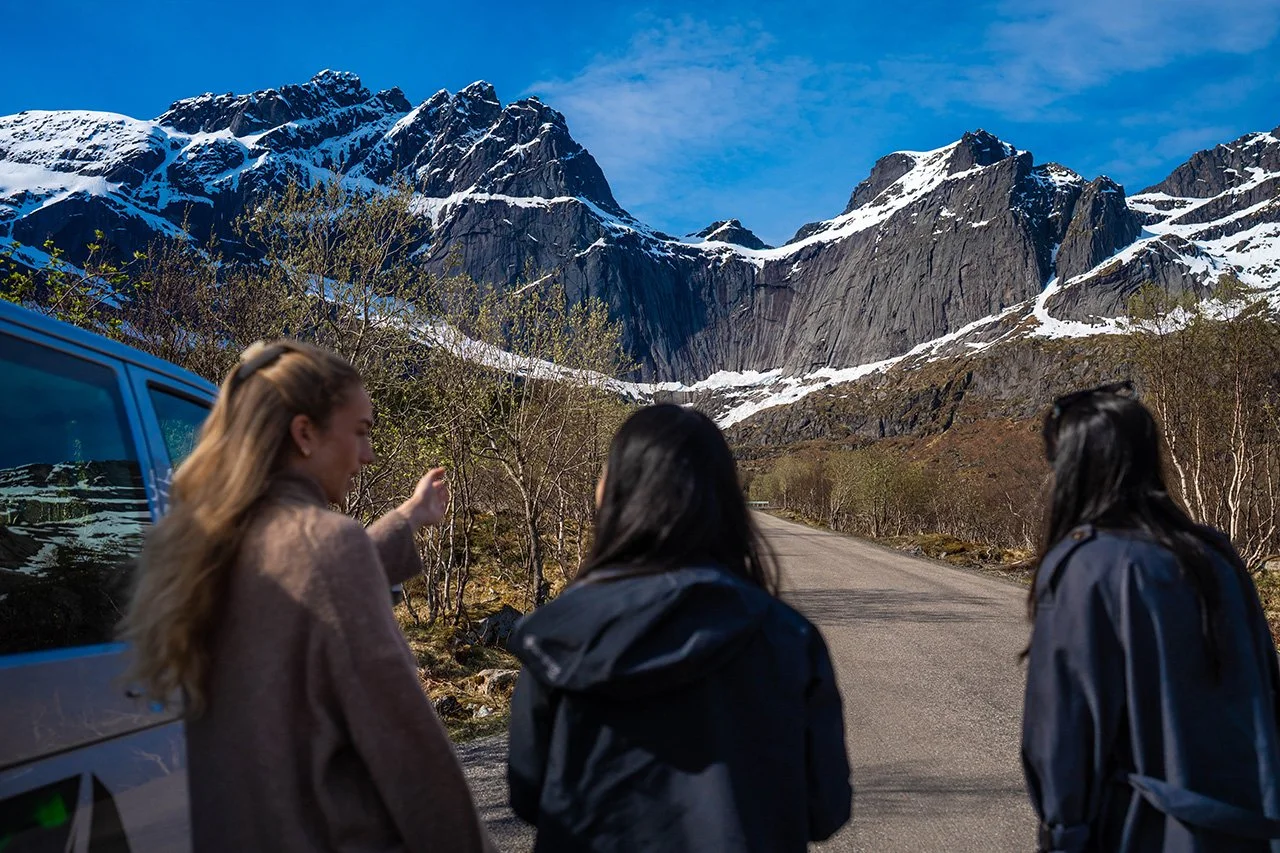
If you've found yourself researching Lofoten, there's a good chance you've already seen photographs that seem almost too beautiful to be real. The good news is that the reality often exceeds expectations. Lofoten is one of those rare destinations where dramatic mountains rise directly from the sea, white-sand beaches sit beneath jagged peaks, and traditional fishing villages continue to thrive much as they have for generations. It is a place where nature and culture are inseparable, and where every turn in the road seems to reveal another postcard view.
Visitors come for many reasons. Some dream of seeing the northern lights dancing above snow-covered mountains. Others arrive to experience the midnight sun, when daylight stretches through the night and time seems to lose all meaning. Photographers are drawn by the extraordinary light and landscapes, hikers by the endless trails, wildlife enthusiasts by opportunities to see sea eagles, moose, whales, otters, and seabirds, and food lovers by the region's rich fishing heritage and world-famous stockfish traditions.
What surprises many visitors is the sheer variety of experiences packed into a relatively small area. In the space of a single day, you might explore a historic fishing village, stand on a white-sand beach, spot wildlife, visit a traditional fish drying site, enjoy local cuisine, and watch the sunset or northern lights over the mountains.
How many days do I need in Lofoten?
The answer depends on how deeply you want to experience the islands. While some cruise passengers may only have a few hours in port and still enjoy a memorable introduction, most visitors find that four to seven days provides a much more rewarding experience.
With a week in Lofoten, you'll have time to explore the major destinations, including Svolvær, Henningsvær, Reine, Hamnøy, Sakrisøy, Ramberg, Nusfjord, and many of the quieter corners that often become visitors' favourite memories. You'll also have time to enjoy activities such as hiking, wildlife watching, northern lights hunting, photography, paddleboarding, or simply slowing down and absorbing the atmosphere.
Many visitors initially plan a short stay, only to realise once they arrive that Lofoten deserves far more time than they expected. It's not uncommon to hear people say they wish they had booked longer.
What is the best time to visit Lofoten?
One of the most common questions travellers ask is when they should visit. The truth is that there is no wrong time to come to Lofoten. Every season has its own personality and appeal.
Winter transforms the islands into a magical Arctic landscape. Snow-covered peaks rise above the sea, the fishing season begins, and the northern lights frequently illuminate the night sky. For many visitors, this is the most iconic version of Lofoten.
Spring brings longer days while the mountains often remain capped with snow. It is a wonderful time for photography, wildlife watching, and exploring before the busiest visitor season begins.
Summer is defined by the midnight sun. From late May until mid July, the sun never truly sets, creating endless opportunities for hiking, photography, and exploration. The beaches are at their most inviting, wildlife is abundant, and visitors can make the most of almost twenty-four hours of daylight.
Autumn offers beautiful colours, quieter roads, fewer visitors, and the return of the northern lights. Many photographers consider it one of the most underrated times to visit.
Rather than asking which season is best, it's often more useful to ask what kind of experience you want to have.
Is Lofoten expensive?
Norway is not known for being a budget destination, and Lofoten is no exception. Accommodation, dining, transport, and activities generally cost more than visitors may be used to elsewhere in Europe.
However, value is about far more than price. The quality of experiences available in Lofoten is exceptional, and many visitors find that the memories they take home are worth every krone spent. Whether it's watching the northern lights overhead, standing on a beach beneath towering mountains, or sharing stories inside a traditional rorbu, these are experiences that are difficult to put a price on.
Planning ahead can help reduce costs, particularly during peak seasons when accommodation availability becomes limited.
Is Lofoten suitable for families, solo travellers, senior travellers, and honeymooners?
One of the great strengths of Lofoten is its versatility. Families appreciate the safe environment, beautiful beaches, wildlife experiences, and opportunities for outdoor adventure. Children often love exploring fishing villages, spotting sea eagles, and discovering life above the Arctic Circle.
Solo travellers frequently find Lofoten to be both welcoming and inspiring. It is one of Europe's safest destinations, and joining guided tours can provide opportunities to meet fellow travellers while benefiting from local expertise.
Senior travellers often discover that many of Lofoten's most spectacular locations are easily accessible. While the islands are famous for hiking, countless viewpoints, beaches, villages, and cultural attractions can be enjoyed without strenuous activity.
For couples and honeymooners, Lofoten provides a setting that feels almost impossibly romantic. Whether enjoying a private tour, staying in a waterside rorbu, photographing the midnight sun, or watching the northern lights together, the islands create memories that last a lifetime.
Is Lofoten crowded?
Lofoten has become increasingly popular, particularly during the summer months, and some of the most famous locations can be busy at peak times. However, the islands remain a surprisingly large and diverse destination.
Away from a handful of well-known viewpoints, it is still remarkably easy to find peaceful beaches, quiet villages, scenic roads, and hidden corners where you may have the landscape almost entirely to yourself. Local knowledge often makes a significant difference, which is one reason many visitors choose guided experiences that reveal places they might otherwise overlook.
How much money should I budget for Lofoten?
The amount you should budget depends on your travel style, but it is sensible to plan for accommodation, dining, transport, and at least a few memorable activities.
While independent travel can be rewarding, organised tours often represent excellent value by combining transport, local expertise, and access to locations, stories, and experiences that visitors may not discover on their own. A well-planned day tour can save considerable time while providing a much deeper understanding of the islands.
Is Lofoten better than Iceland, Tromsø, or the Faroe Islands?
Comparisons are natural, but they can also be misleading because each destination offers something unique.
Iceland is famous for volcanoes, waterfalls, glaciers, and geothermal activity. Tromsø is an excellent Arctic city with museums, restaurants, nightlife, and easy access to northern lights experiences. The Faroe Islands offer dramatic coastal scenery and a fascinating island culture.
What makes Lofoten stand apart is the combination of spectacular landscapes, authentic fishing heritage, accessible wildlife, traditional villages, northern lights, midnight sun, and an extraordinary diversity of experiences within a relatively small area. Many visitors who have travelled extensively throughout the Nordic region consider Lofoten to be one of the most beautiful places they have ever visited.
What makes Lofoten unique?
There are beautiful landscapes all over the world, but very few destinations combine scenery, culture, history, wildlife, and natural phenomena in quite the same way as Lofoten.
The islands have been shaped by fishing for centuries. Without the cod that arrive here each winter, the communities, villages, and traditions that visitors enjoy today simply would not exist. This rich cultural heritage sits alongside some of Europe's most dramatic scenery, creating a destination that feels both spectacular and authentic.
Whether you're standing beneath the midnight sun in summer, watching the aurora dance overhead in winter, exploring a historic fishing village, spotting sea eagles above a fjord, or simply enjoying a quiet moment beside the sea, there is a sense that Lofoten offers something genuinely special.
Can I visit Lofoten all year round?
Absolutely. Lofoten is not a seasonal destination. It is a year-round destination that changes character throughout the year.
Winter offers northern lights and dramatic Arctic landscapes. Spring combines increasing daylight with snow-capped mountains. Summer brings the midnight sun and endless opportunities for outdoor adventure. Autumn offers vibrant colours, fewer visitors, and the return of dark skies for aurora viewing.
No matter when you choose to visit, Lofoten has a way of exceeding expectations. Many travellers arrive planning a once-in-a-lifetime trip and leave already thinking about their next visit.